

AtlassianOrganizational transformation. Design leadership. Experience strategy. Design systems. AI innovation.
14 products. One design language. A stronger organization.
As Atlassian's product ecosystem expanded, so did the complexity of delivering consistent experiences across products and teams. Maintaining design quality at scale required more than strong individual product teams—it required a shared design language, stronger collaboration, and new ways of working.
The opportunity was to strengthen how the design organization operated, deepen its partnership with engineering, and connect all 14 products through a more unified experience—while embracing AI to help teams work smarter.
Led during Gene Lee's tenure as VP of Design at Atlassian, in collaboration with internal teams. Work predates MAP.
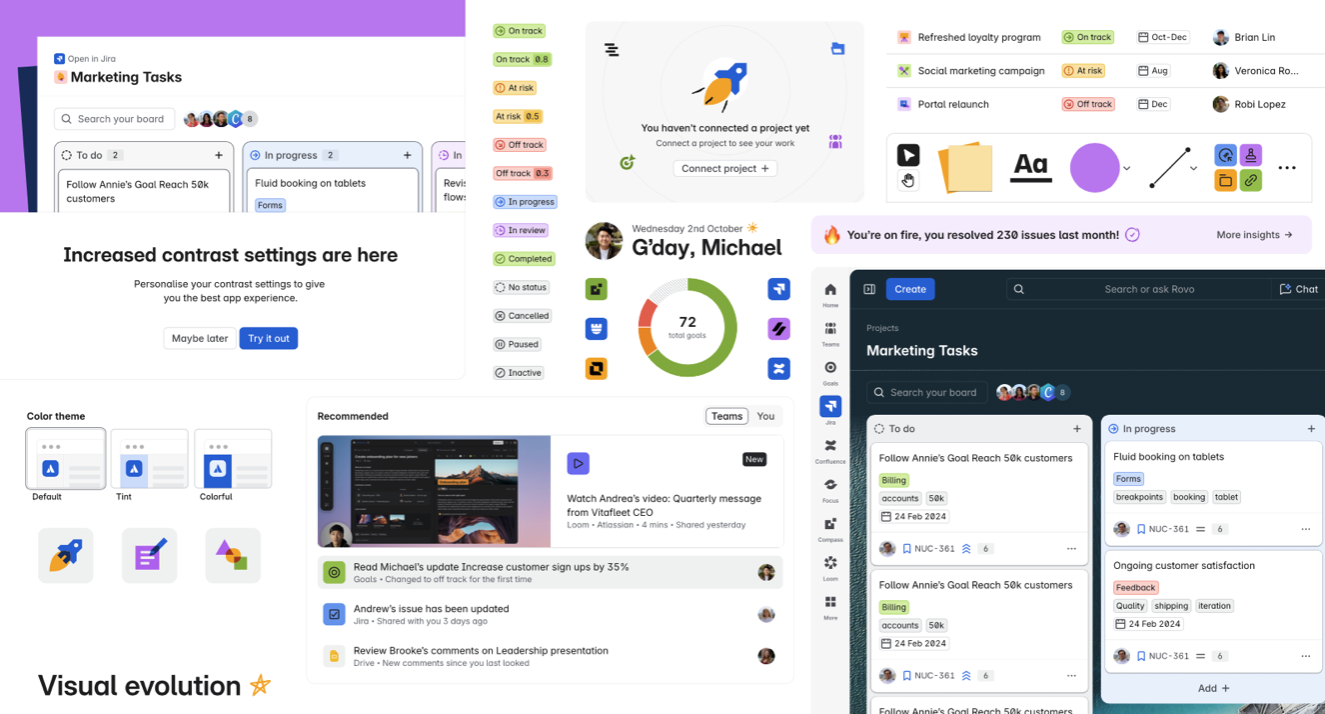
The visual evolution of Atlassian's product experience across its portfolio.
The challenge
Great products. Different experiences.
Atlassian's portfolio served a wide range of teams, industries, and workflows. But as the ecosystem evolved, differences in visual language and interaction patterns created opportunities for greater consistency.
The goal was not to make every product identical. It was to establish a cohesive experience that felt unmistakably Atlassian while allowing individual products to retain their purpose.
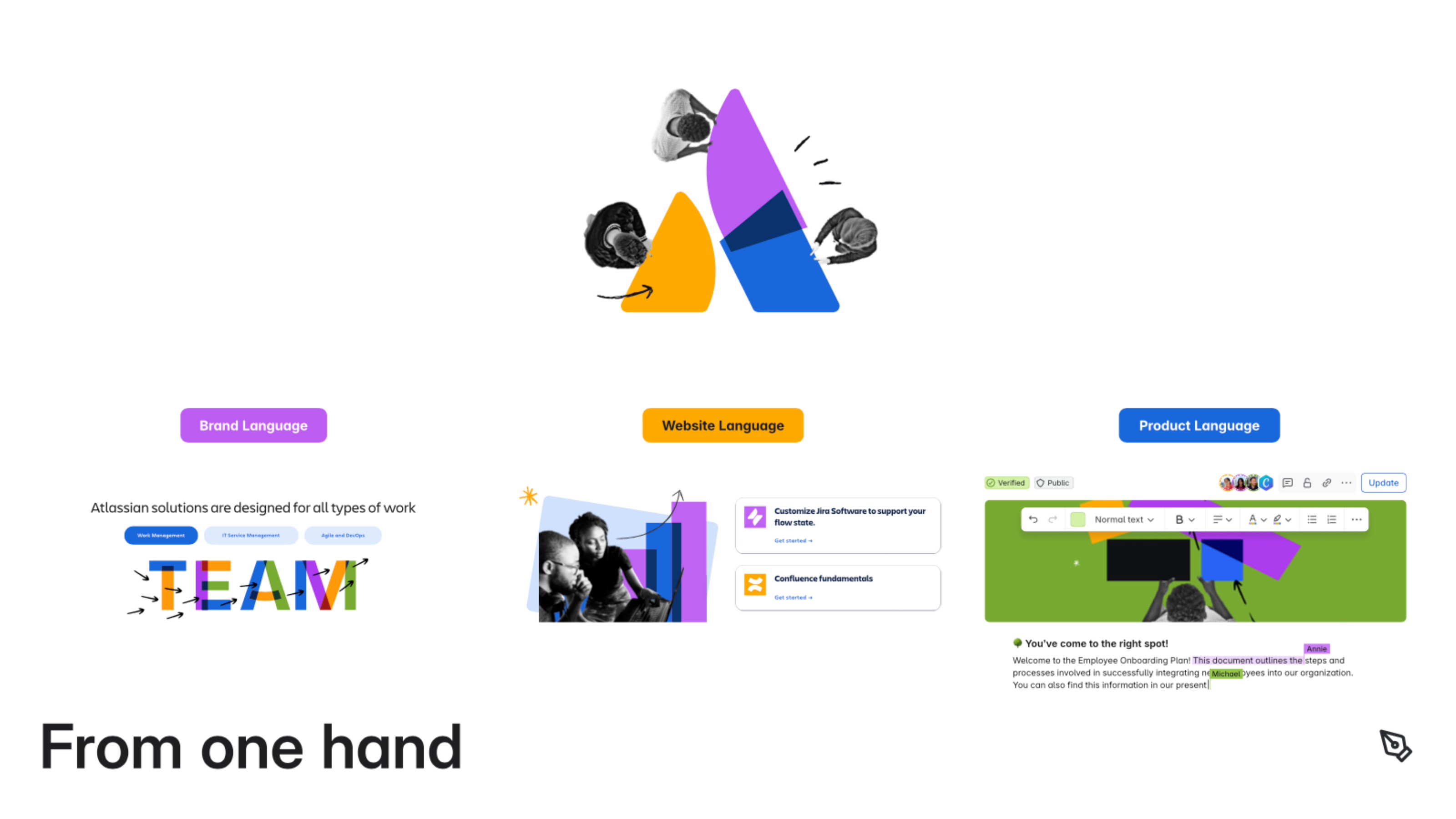
One voice across brand, website, and product — the ambition behind a unified language.
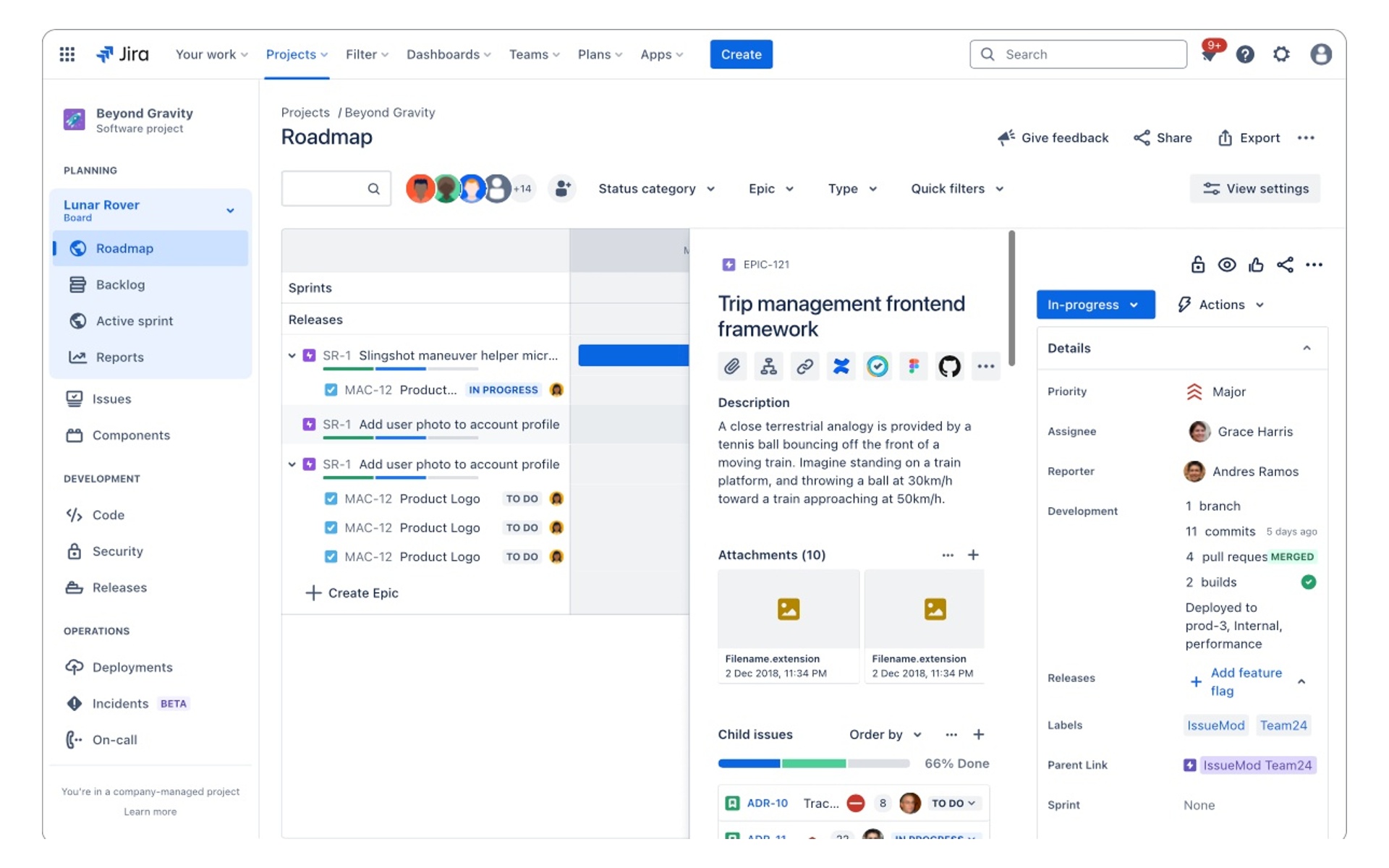
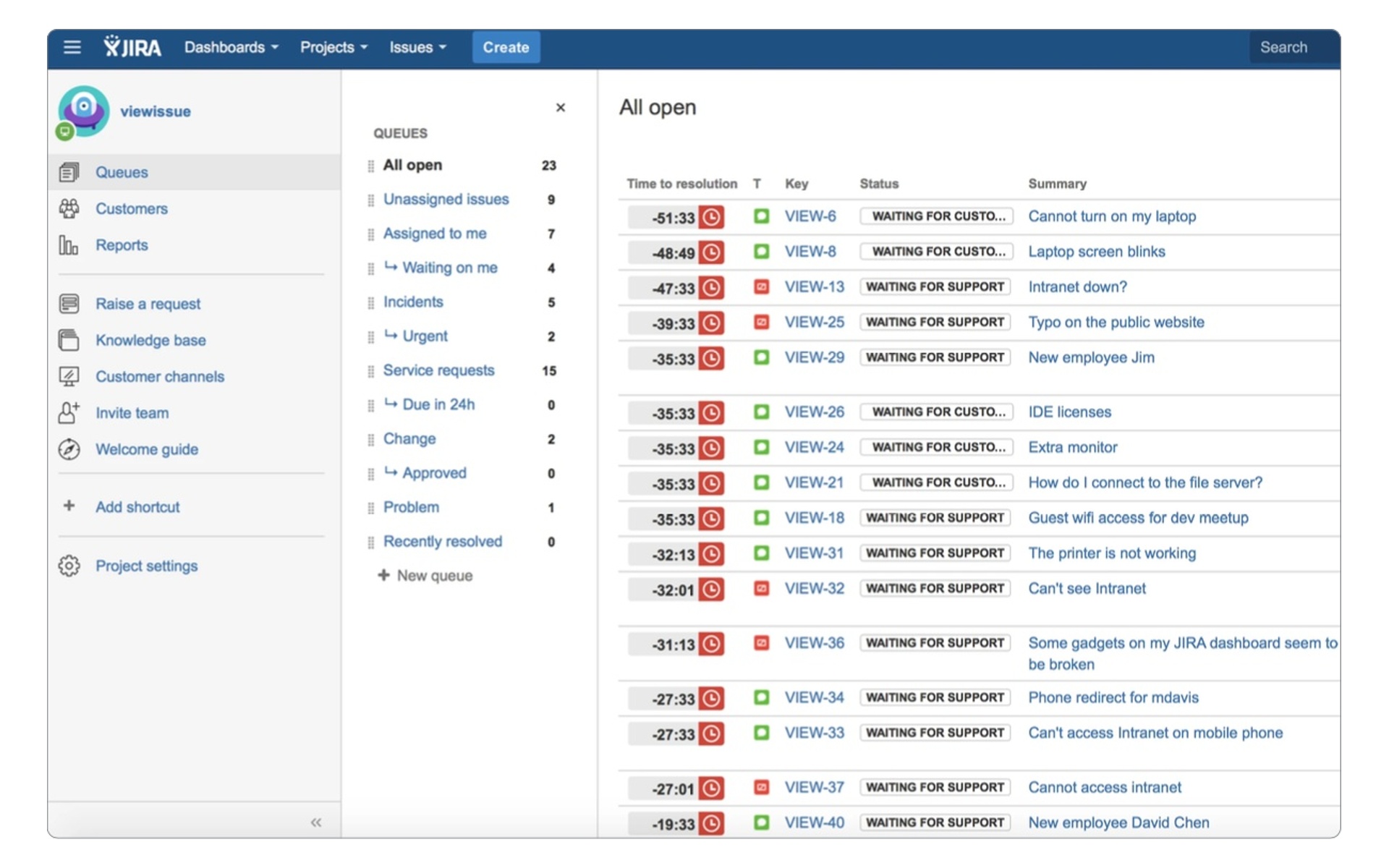
Before: Jira, 2017. After: Jira, 2022. Different workflows illustrate the evolving visual language and the opportunity to carry one language across the whole portfolio.
How we work
Design excellence needs an operating system.
Creating excellent customer experiences requires more than talented designers. It requires clear priorities, effective operating practices, strong partnerships, and an environment where quality and speed can improve together. The organizational strategy focused on five interconnected areas.
Vision
Establish a common direction.
Quality
Raise the standard of experience design.
Velocity
Improve how teams collaborate and deliver.
Capability
Grow organizational skills and capacity.
Visibility
Make work, decisions, and outcomes more transparent.
Alignment at scale
Better design starts with better collaboration.
A central priority was strengthening the relationship between design and engineering.
The work focused on aligning workflows, creating shared expectations, improving decision-making, and bringing greater consistency to how teams moved from exploration to delivery.
Rather than relying on isolated design processes, the operating model encouraged stronger partnership across functions — one shared path from an idea to its impact.
Wonder
Scope the work, research, and define the problem together.
Explore
Define solutions, generate ideas, and prototype early.
Make
Detailed design, engineering sync, and a quality handover.
Impact
Validate, launch, and measure what the work changed.
A simplified view of the unified workflow — shared phases and quality gates connecting design and engineering from exploration to delivery.
A unified vision
One design language across 14 products.
The North Star initiative envisioned a modern, connected Atlassian experience, harmonizing visual and interaction principles across the product portfolio. The work explored how products could feel part of one ecosystem while remaining flexible enough to support distinct use cases — unified navigation, visual foundations, typography, color, accessibility, product expression, and experience patterns.
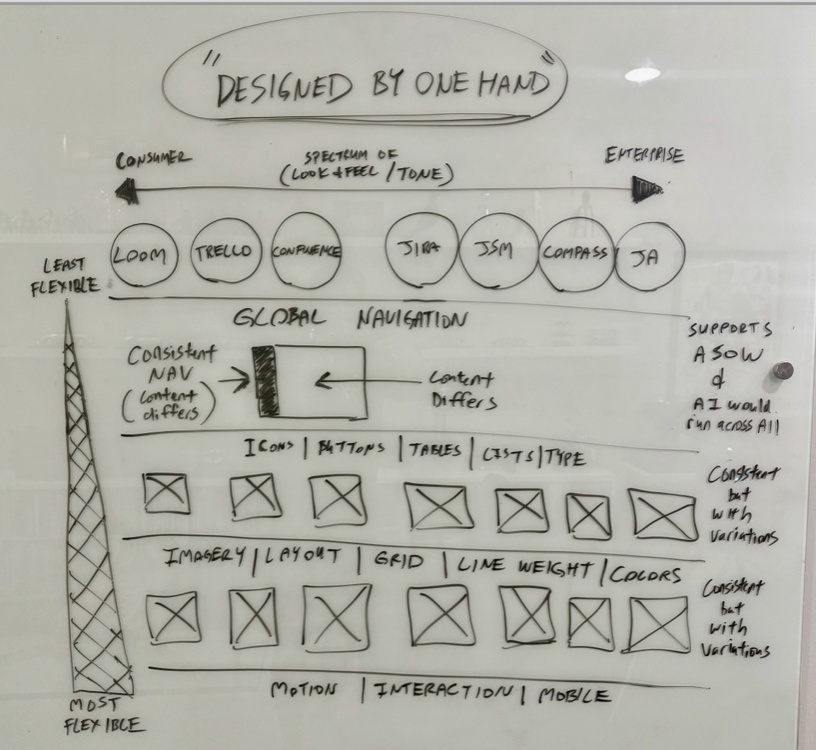
Designed by one hand.
The strategy separated what should stay consistent from what should stay flexible. Global navigation and shared interaction patterns connect the ecosystem; imagery, layout and product expression adapt to the teams using it.
The architecture translated that direction into layers: base navigation, app content, movable elements, floating panels and contextual menus. A common structure lets each product retain its purpose without feeling disconnected.
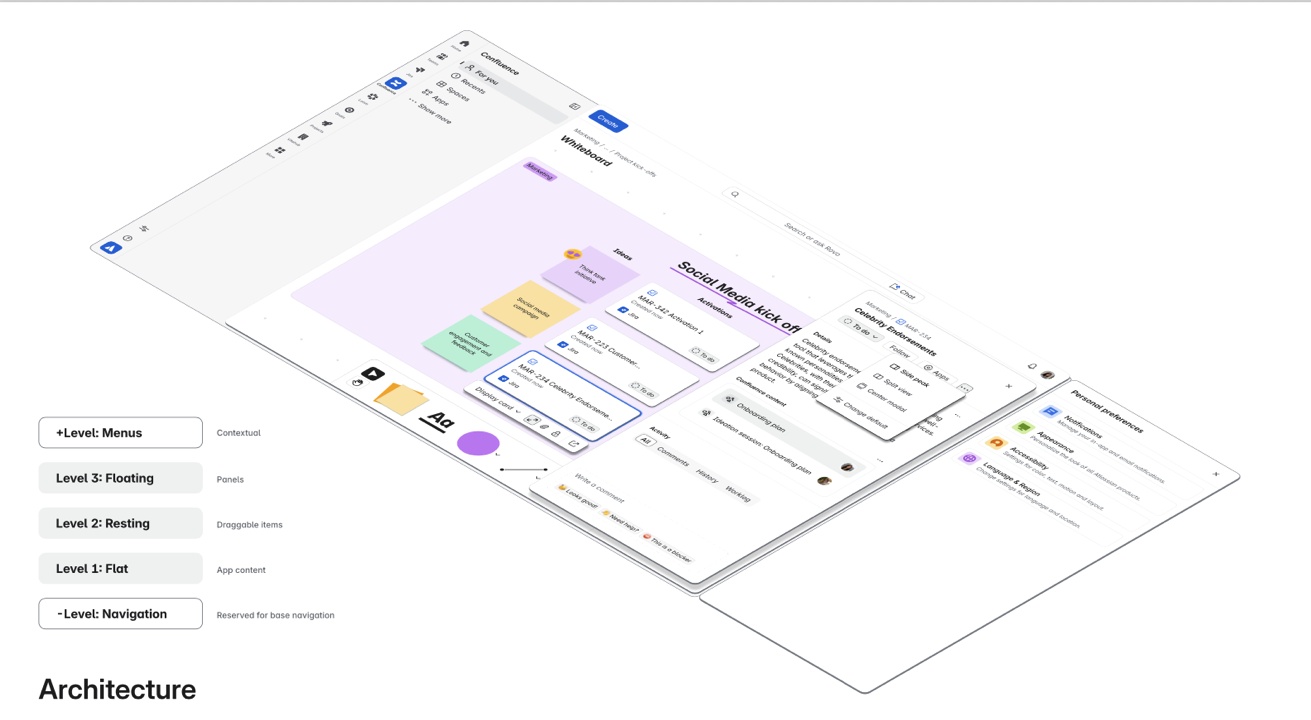
Experience architecture — shared layers supporting a connected product portfolio.
From separate views to a connected team experience.
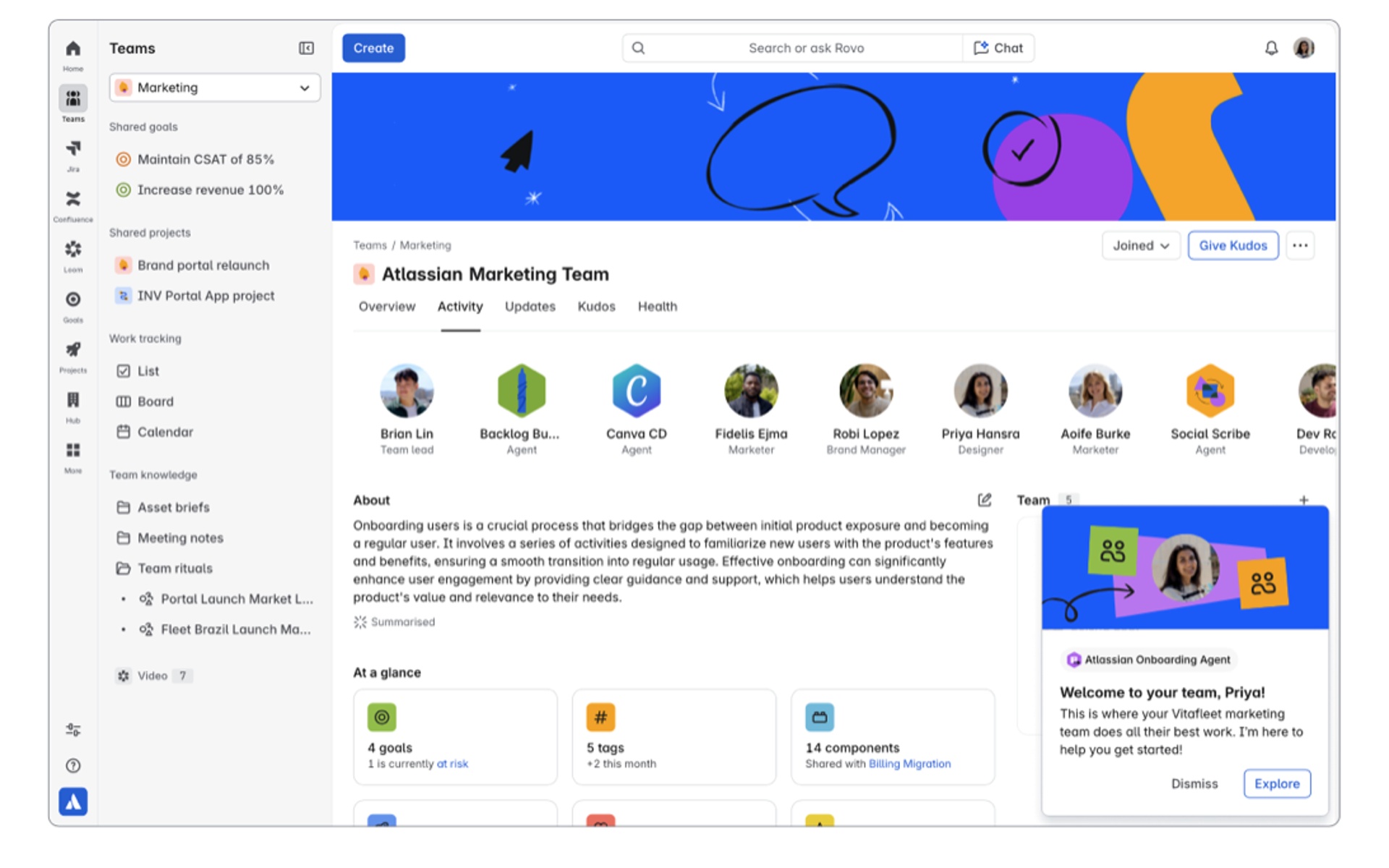
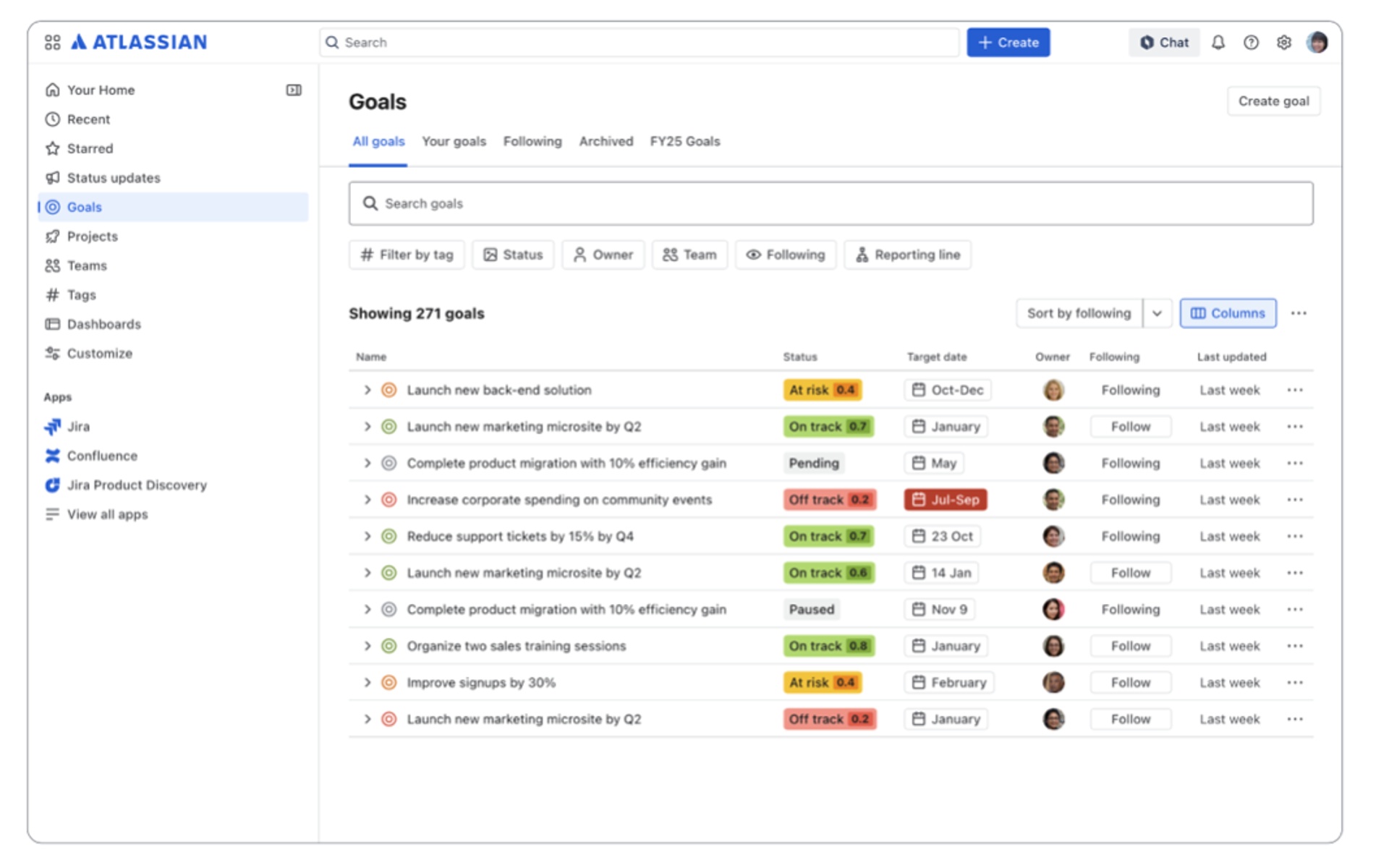
Before: existing goals view. After: Teams vision concept, bringing goals, projects, knowledge and an onboarding agent together. The after view is a concept, not a claim of shipped functionality.
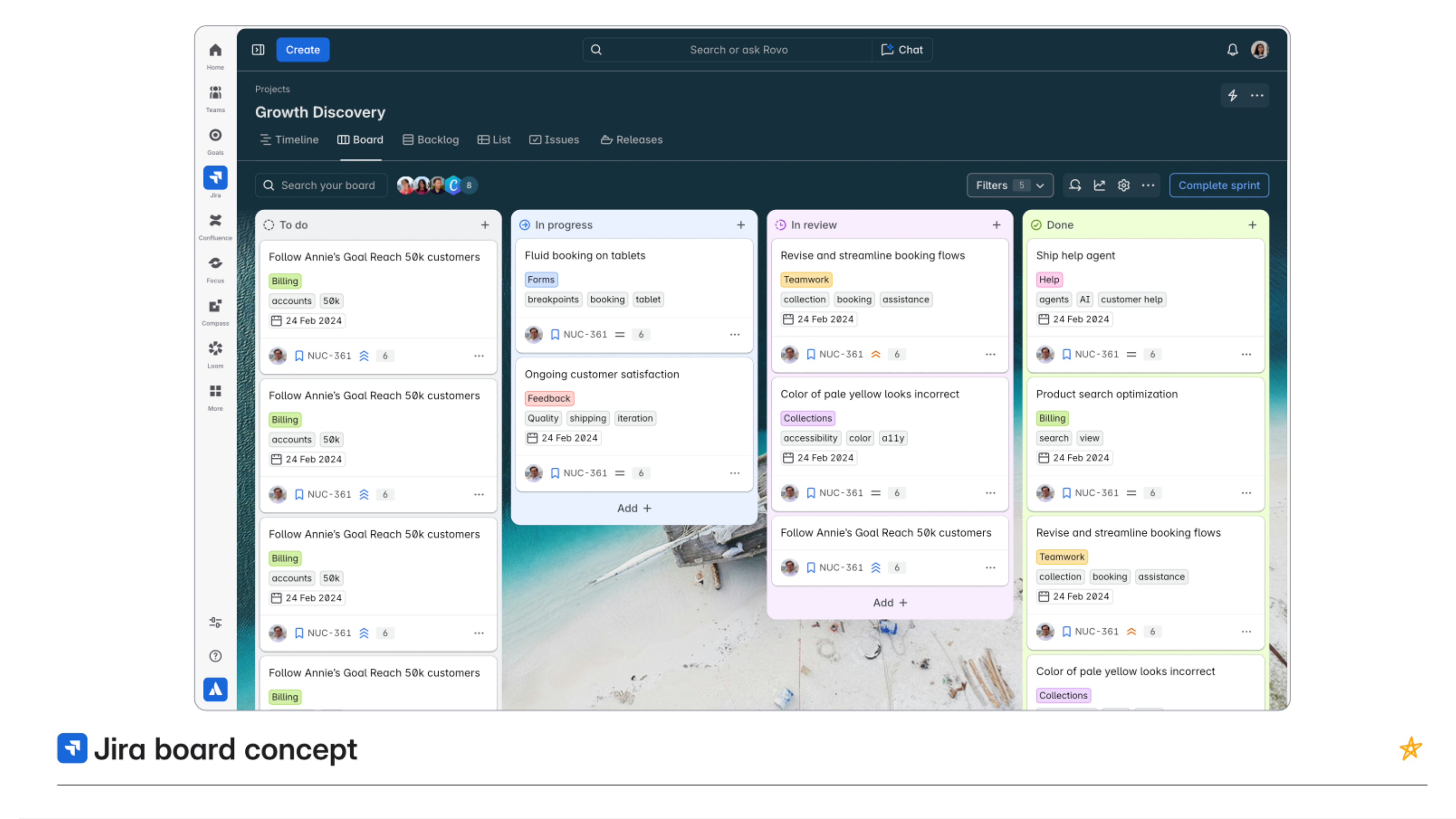
Jira board concept — North Star exploration.
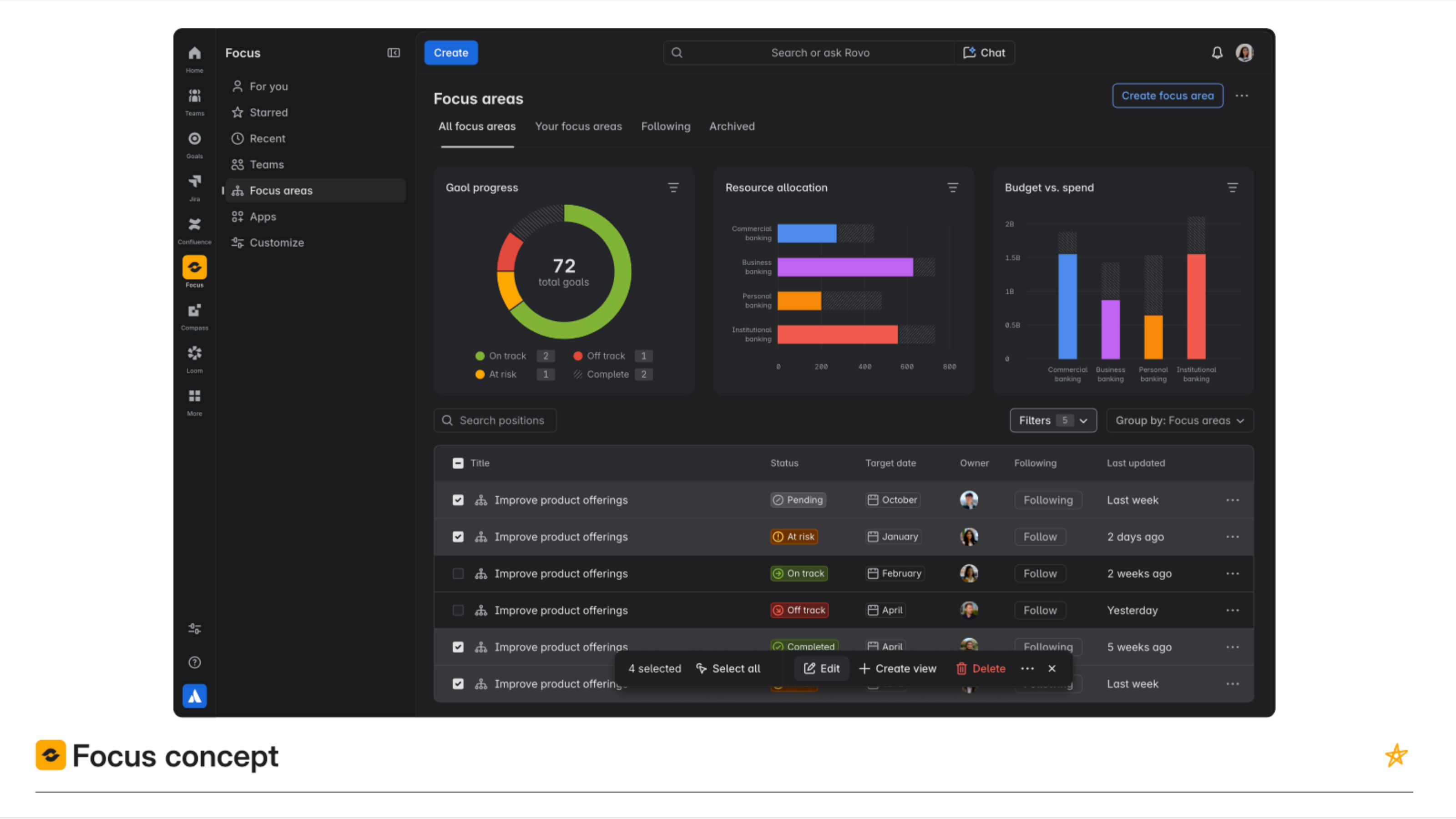
Focus concept — North Star exploration.
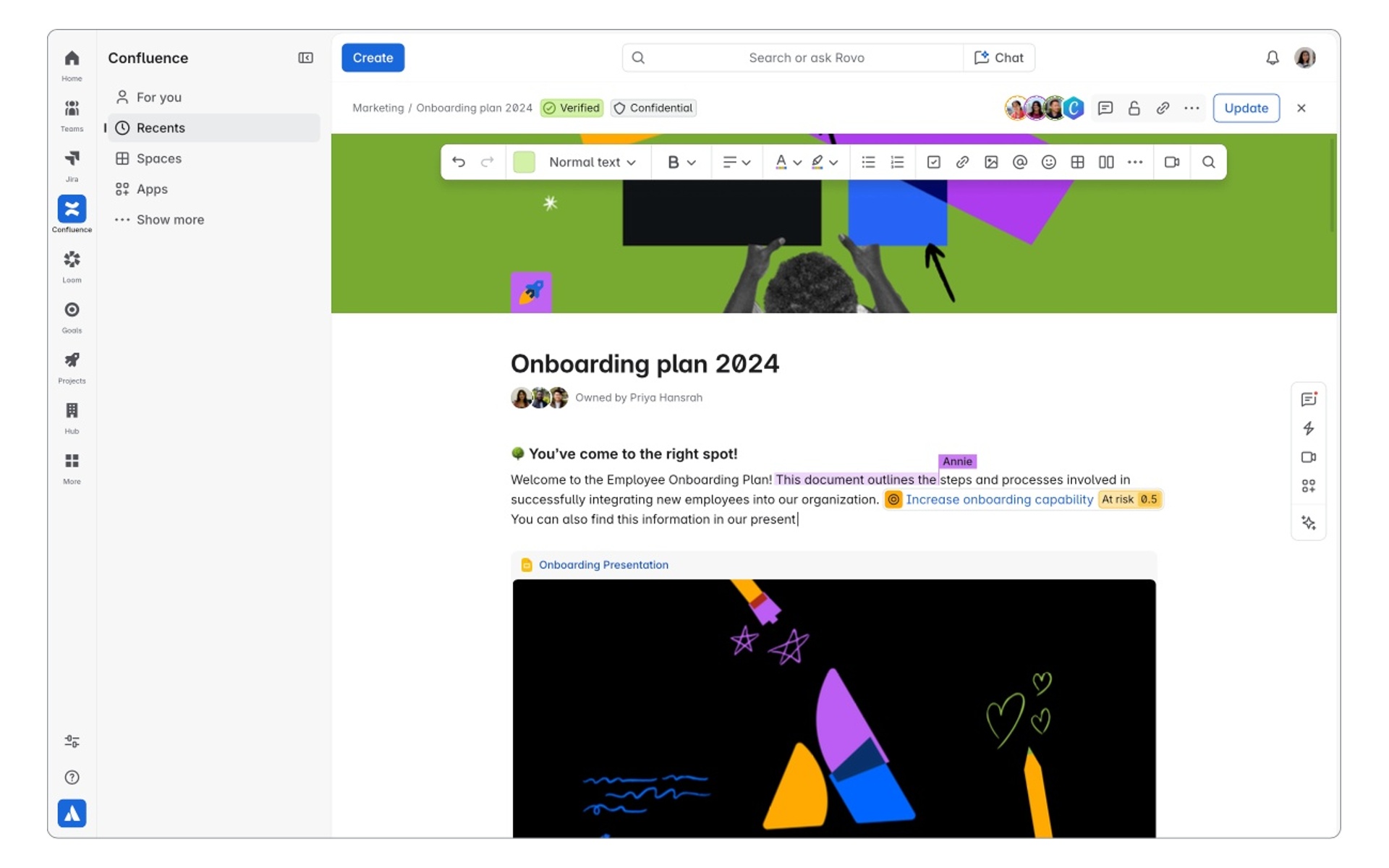
Confluence concept — North Star exploration.
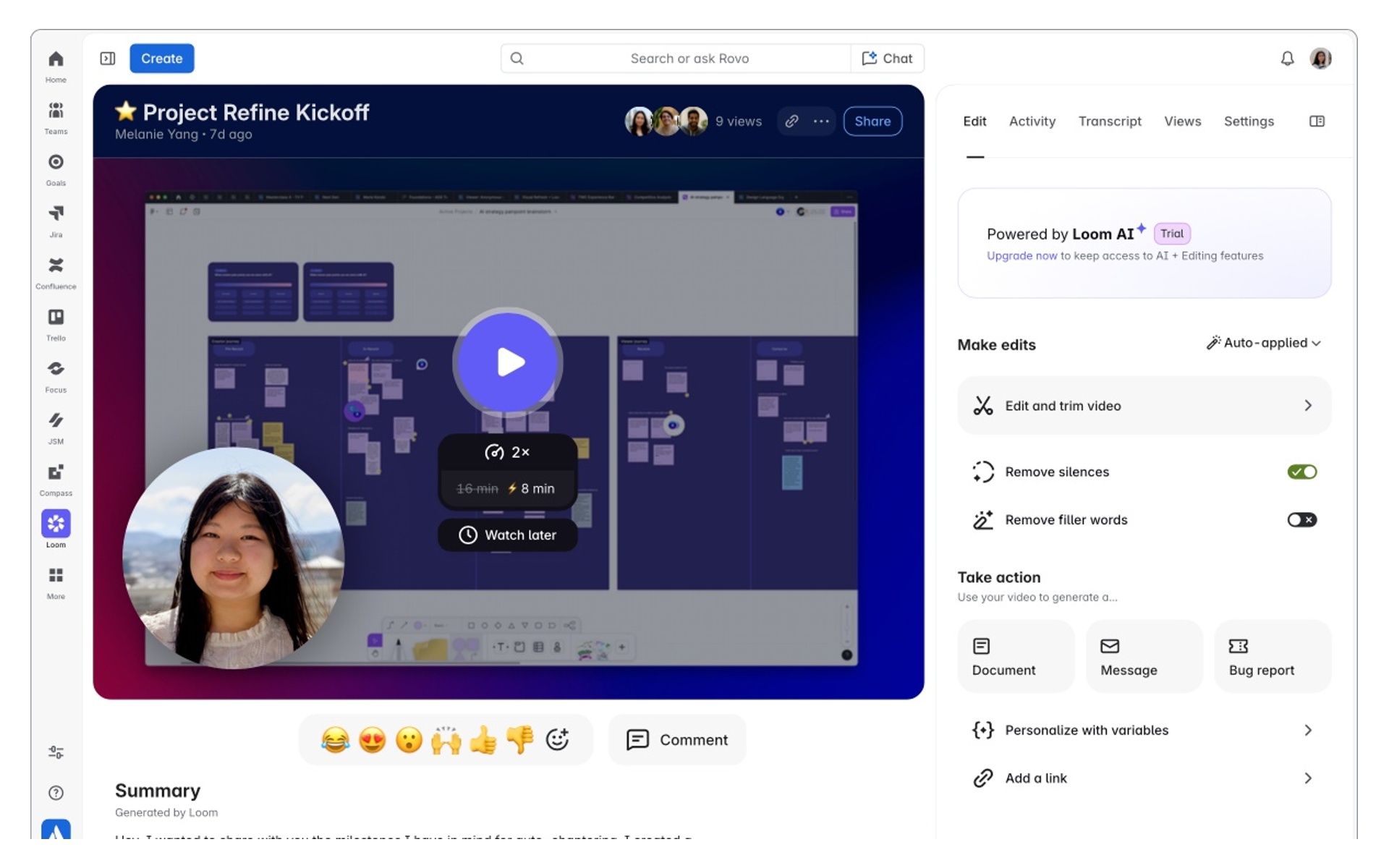
Loom concept — North Star exploration.
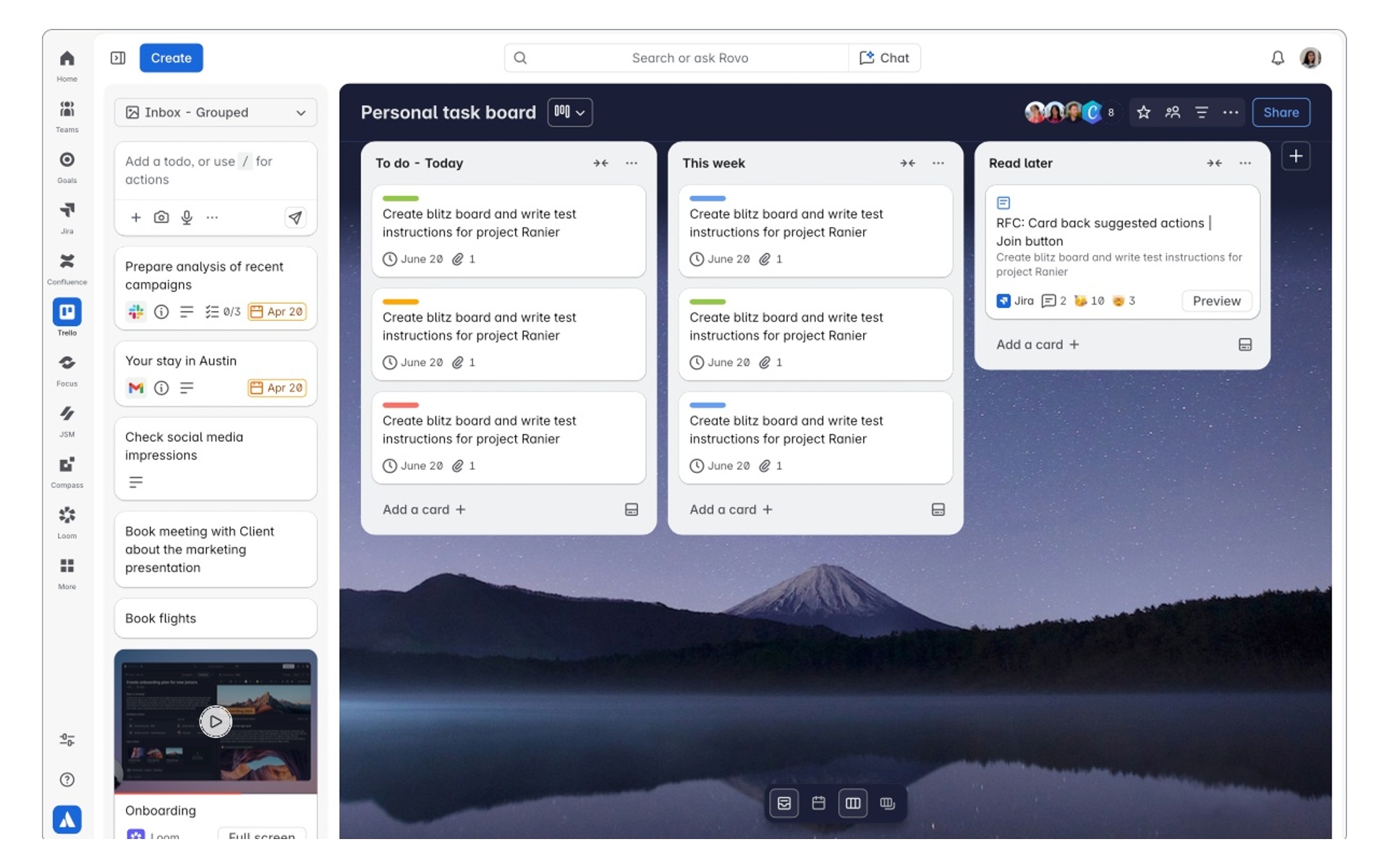
Trello concept — North Star exploration.
North Star concepts — exploratory designs that aligned teams around a shared direction.
Design at scale
Consistency at scale. Flexibility by design.
A shared design system provides the foundation for coherence across a large product portfolio. With oversight of the Design Systems team, the initiative brought together visual foundations, interaction behaviors, accessibility, customization, and reusable components — a scalable language that could support the needs of individual products while creating a more unified customer experience.
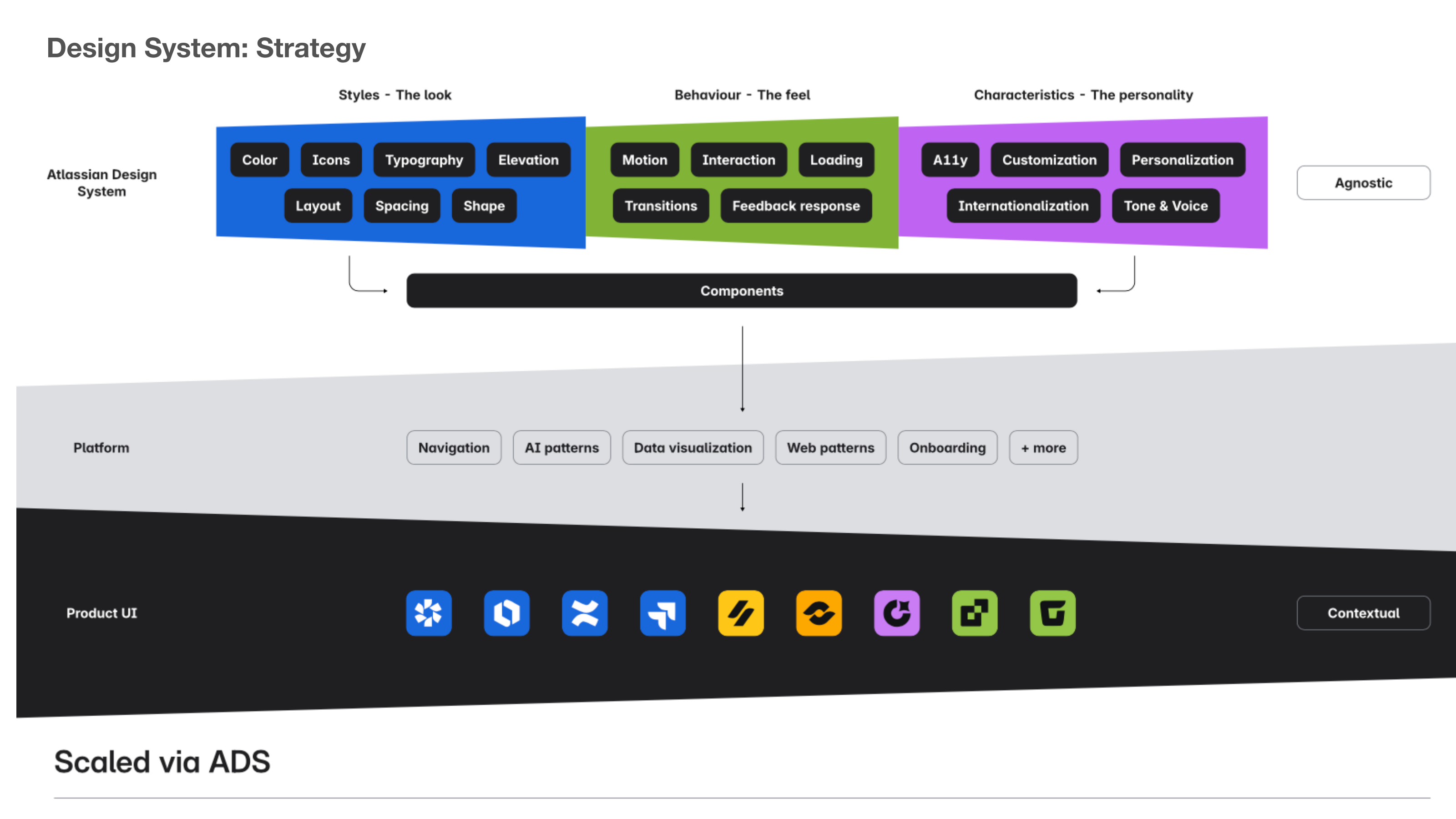
The design system strategy: foundations and behaviors scaled through components and platform patterns into every product.
AI-enabled transformation
Making AI useful through content design.
As AI capabilities expanded, content design became an important bridge between technology, language, and user experience.
With responsibility for Atlassian's Content Design organization, Gene helped coordinate AI initiatives across design — exploring opportunities to improve content workflows, reduce repetitive production tasks, and strengthen the consistency and quality of written experiences.
The work connected content strategy with emerging AI capabilities and more efficient internal practices — from drafting and summarization to brand voice and tone at scale.
Content designers shaped prompts and responses, wrote clear AI interaction labels, defined tone and safety boundaries, and structured knowledge articles so AI could retrieve more useful answers. The focus was not simply generating more words — it was making the right information clearer, more trustworthy and easier to act on.
~30%
Reported workflow efficiency gain from AI features implemented across internal teams — reducing hundreds of hours of production work on long-form content, including automated SEO, titling, and brand voice and tone.
Prompts & voice
Shape context, test responses and maintain a consistent enterprise tone.
Trust & guardrails
Communicate limitations, uncertainty and next steps without obscuring the task.
Knowledge & retrieval
Structure knowledge articles and question-and-answer content for clearer AI answers.
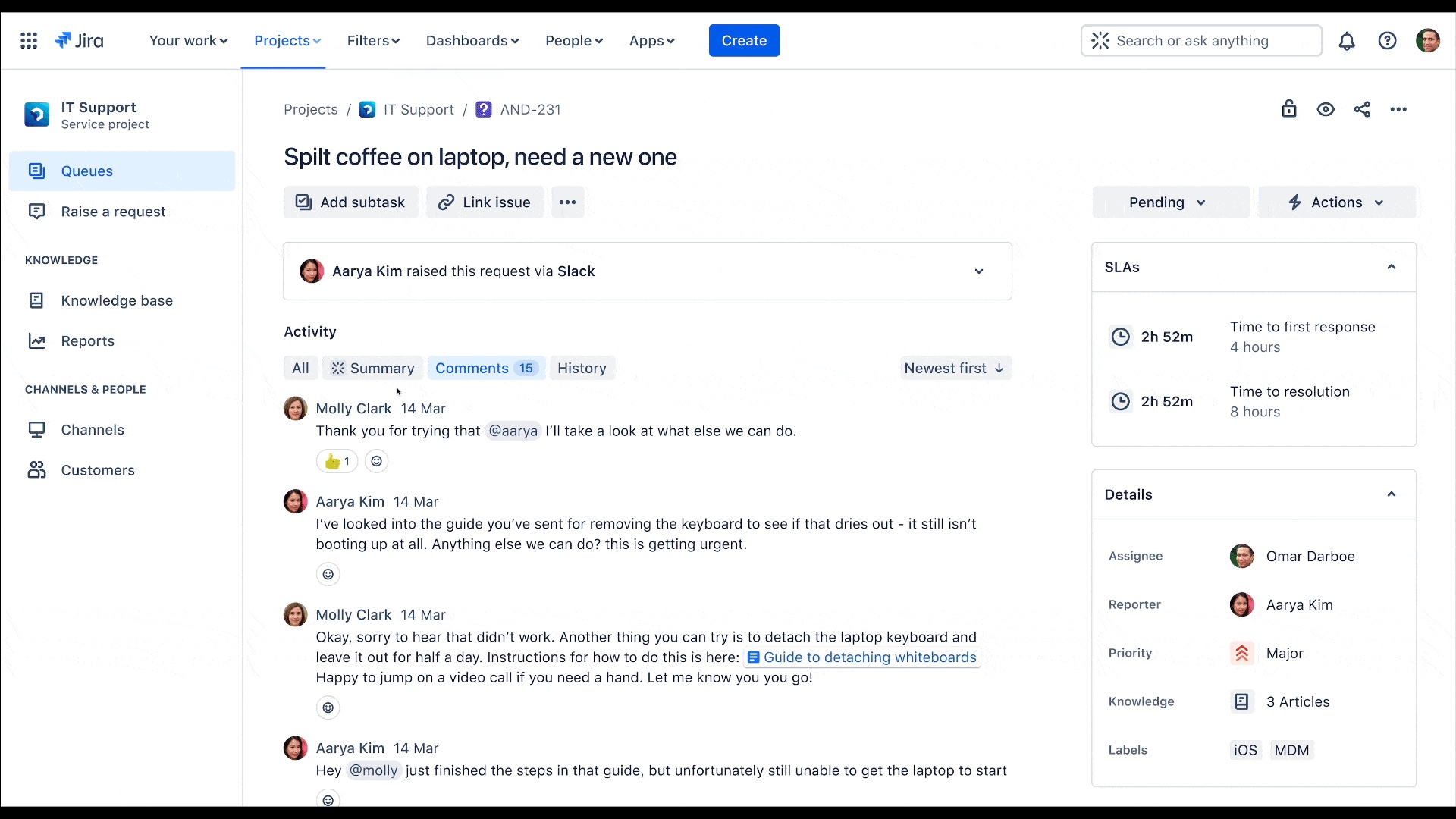
Summarize help-request activity so assigned agents can get up to speed.
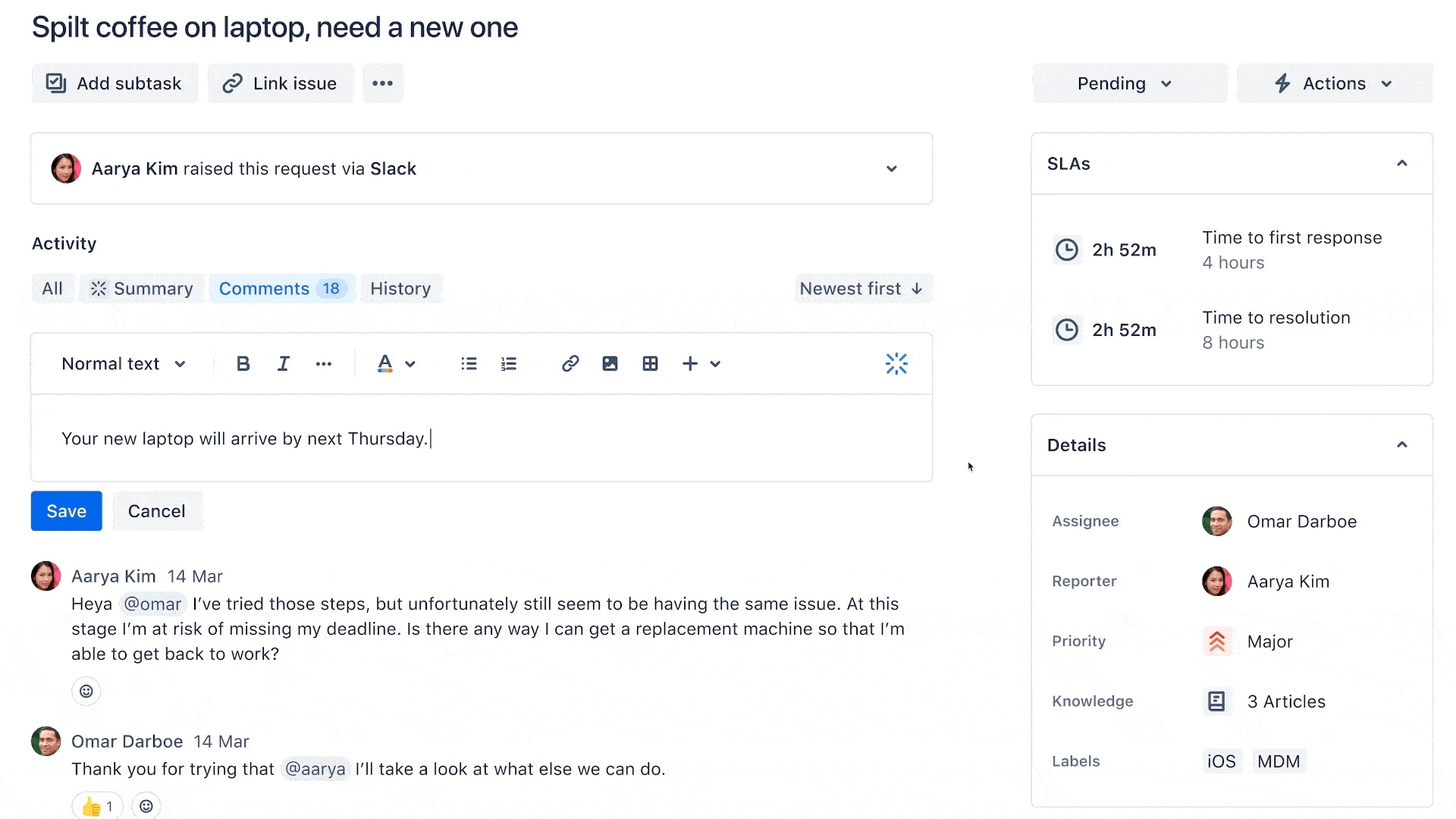
Help craft thoughtful support responses with appropriate clarity and tone.
These examples illustrate how content strategy and thoughtful language can make AI experiences clearer, more useful, and more human. The internal workflow outcomes below are distinct from these illustrative product examples.
The impact
Less repetitive work. More useful content.
Content workflows
AI-assisted knowledge-page production, including SEO, titling, and brand voice and tone.
Experience
Establishing a unified design-language direction across 14 products.
Collaboration
Improving the structures and practices connecting design and engineering.
Innovation
Connecting content design, prompts, guardrails and knowledge quality with practical internal workflows.
~30%
Reported workflow efficiency gain from AI-assisted internal knowledge-page production.
Up to 85%
Reported reduction in tickets requiring human intervention across internal AI-enabled workflows.
90% → 95%
Reported improvement in SLA compliance across internal AI-enabled workflows.
Reported outcomes from internal AI-enabled workflow initiatives.
The best product experiences begin with how organizations work.
Atlassian demonstrates how design leadership can connect organizational strategy, operational effectiveness, shared systems, and emerging technology to support more coherent experiences at scale.
Want this rigor pointed at your mission?